1919 is the eighth year of the Republic of China when Qi Baishi was 57 years old. In the early March, he came to Beijing for the third time. Different from the previous two visits for sightseeing, he decided to settle in Beijing. He lived in Fayuan Temple temporarily and barely earned his living by selling paintings and seals.
That year also witnessed China’s diplomatic failure at the Paris Peace Conference which directly triggered the May 4th Movement. Suddenly all the old ideologies, rules and habits were under attack from the critics while a surge of new ideas and opinions emerged.
That was a period full of changes and transitions.
For Qi Baishi, it is hard to tell whether he is luck or not to be born in such a turbulent time.
‘Rather being a dog living in a peaceful time than being a human in the age of turbulence.’ The turmoil caused by war threatened Qi's safety, so he was forced to be away from hometown and settled in Beijing. It is beyond misery to be among the exiles and see the beloved home under fire.
‘The fall of a nation inspires poets and the vicissitude of the world better the choice of sentences and words.’ Just between the end of Qing Dynasty and the beginning of the Republic of China when all the thoughts, despite new or old, intertwined and collided with each other, many prominent figures from various fields came into the spotlight, highlighting the age of masters.
Qi Baishi’s reform on his art in his sixties, which lasted for one decade and is not a result of taking advices from Chen Shizeng so much as the social environment, is key to making Qi a great master.
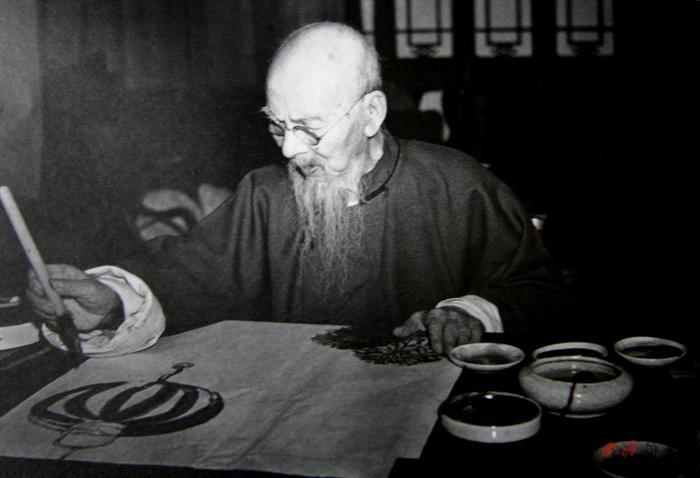
On Qi Baishi’s arrival in Beijing, he learned from Zhu Da. However, his painting style was too archaic and stark to be popular. As a result, few customers were interested in his painting even the price was only half of others. Qi Baishi once wrote in an inscription:” I’ve been painting for decades, but people rarely show any interest in my works. This has got to stop. I want to stay out of the market for some time. You don’t have to feel sorry for me even if I starve to death, for I have lived up to my satisfaction.”
Qi Baishi kept himself from the crowd and declined seeing any visitor so as to focus on his painting career. He took the advice of Chen Shizeng, a close friend of him, and created a new painting style of Hong Hua Mo Ye (featuring red flowers and ink leaves), which was abundantly brisk and lively, by which Qi Baishi cut a striking figure in the painting community.

Following the painting reform, Qi Baishi also made a breakthrough in seal engraving. In 1931, his artistic career reached the prime. He compiled Qi Baishi’s Rules on Selling Paintings and Seals.
The political situation forced Qi Baishi to move frequently. He settled at No.15 Kuache Hutong in Beijing at last. During the days in Beijing, he was a close associate of many celebrities from both Beijing and Tianjin, who either bought his paintings or learned from him.
The Xiling Yinshe 2019 Spring Auction presents a pair of Qingtian stone seals engraved by Qi Baishi for sale. The two seals are made for Wang Zekuan, Wang Zhanyuan’s son. Wang Zhanyuan was a key figure of a fraction of the Northern Warlords, who was appointed as Zhuangwei General and Xiangwu General by Yuan Shin-Kai. Later, he quit his military career and started out in business which operated all over the Beijing city.

Photo of Wang Zekuan, Wang Zhanyuan and their family
Taking a close look at the two seals: The inscription overall is vertically written, from right to left. The strokes appear like lotus stems which are as slender yet unbending as iron pike. Appreciators will be impressed by the joy of wildness of it. The second seal is intagliated with four characters, Ze Kuan Zhi Xi (Zekuan’s seal), which are upright and foursquare at the first sight. However, you will sense the vigor and vitality inside the seal after a close examination. The proper density, length and curve of the strokes show the undisputed carving skills of the engraver.
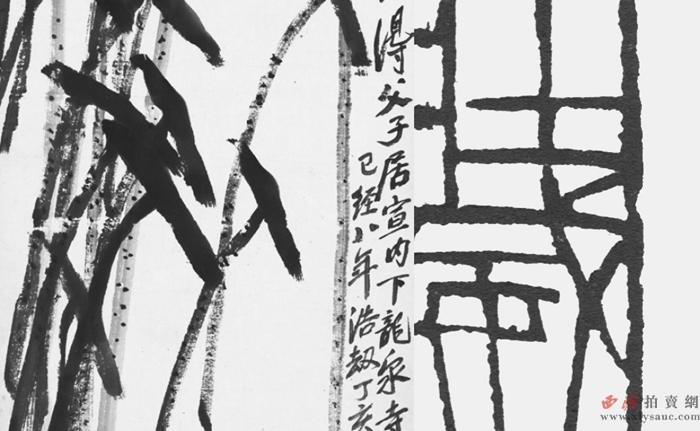
Qi Baishi’s painting, Lotus in Autumn (partial) and the two characters “Zhuang Wei”
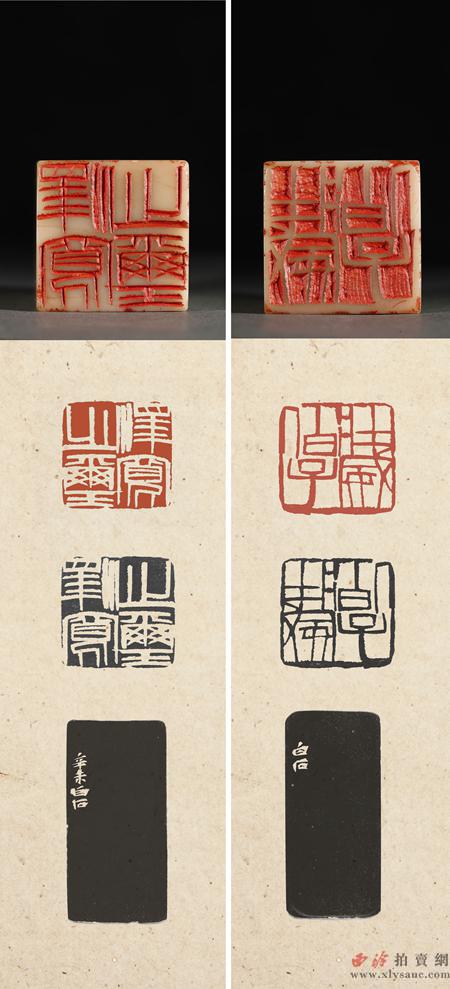
A PAIR OF QINGTIAN STONE SEALS ENGRAVED BY QI BAISHI FOR WANG ZEKUAN’S PRIVATE USE
Date 1931
Illustrated: 1. Seal Collection of Qi Baishi, p. 79, Bashu Book Society, 1988
2. Seal Impressions of Qi Baishi, pp. 94&237, Rongbaozhai Publishing House, 1991
3. Complete Collection of Qi Baishi: Seal Cuttings, vol. 8, p. 206, Hunan Fine Arts Publishing House, 1996
4. Seal Cuttings of Qi Baishi, p. 31, People’s Fine Arts Publishing House, 1997
5. Four Masters of Xiling Yinshe: Exhibition of Paintings and Calligraphy by Ding Ren, Wang Ti, Ye Ming and Wu Yin, p. 70, Chongqing Publishing House, 1999
3.7×3.8×8.1cm×2